

How to Choose the Best Bicycle
Posted by Bike Attack on Nov 1st 2026
How to Choose the Best Bicycle for You: 12 Important Questions to Ask Before Buying a Bike
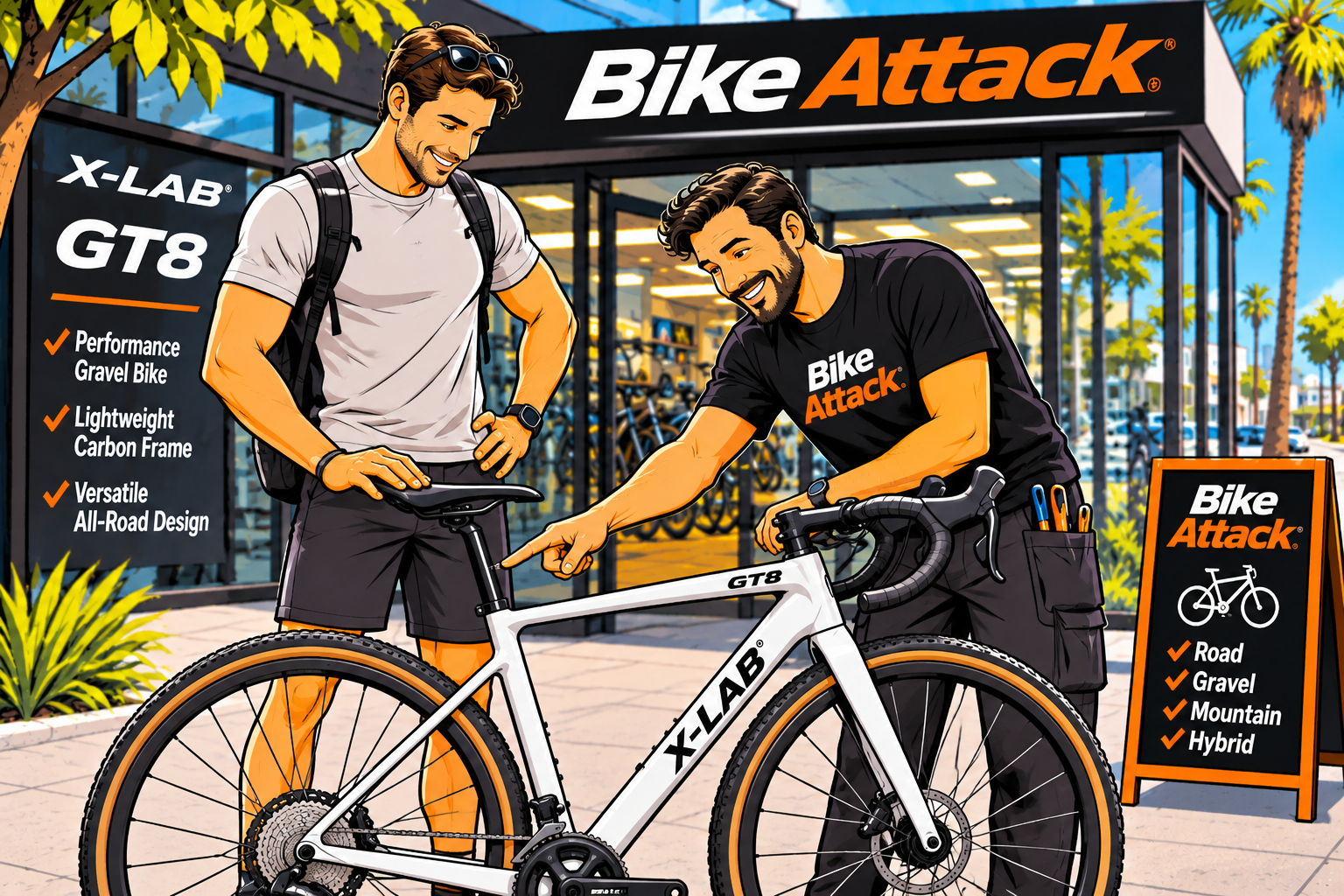
Your Complete Bicycle Buying Guide from Bike Attack in Santa Monica, California
Buying a new bicycle should be exciting, but with so many different types of bikes, frame designs, components, and price ranges available, finding the right bicycle can feel overwhelming.
Should you buy a road bike, mountain bike, hybrid bike, gravel bike, commuter bike, or beach cruiser? Do you need suspension? How many gears should your bicycle have? Does the weight of the bike matter? And how do you know which frame size fits you?
At Bike Attack in Santa Monica, we believe the best bicycle isn't necessarily the most expensive, the lightest, or the one with the most advanced components.
The best bicycle is the one that fits your body, riding experience, lifestyle, fitness goals, and the way you actually plan to ride.
Before buying a new bicycle, take a few minutes to ask yourself these important questions. Your answers can help you avoid costly mistakes and choose a bike that you'll enjoy riding for years.
1. Are You a Beginner or an Experienced Cyclist?
Q: Does my cycling experience matter when choosing a bicycle?
A: Absolutely! Your riding experience is one of the most important factors in choosing the right bike.
If you're a beginner or returning to cycling after several years, you may prefer a bicycle that offers:
-
A comfortable and stable riding position.
-
Predictable steering and handling.
-
Easy-to-use gears and brakes.
-
A frame that makes mounting and dismounting comfortable.
-
Tires suitable for your typical riding surfaces.
-
A comfortable saddle and properly adjusted handlebars.
A hybrid bike, comfort bike, or recreational bicycle can be a good starting point for many new riders.
Experienced cyclists may prefer a performance road bike, lightweight carbon bicycle, technical mountain bike, or gravel bike designed for more demanding riding conditions.
Why this matters: A bicycle that matches your experience and confidence will be more enjoyable to ride and easier to control.
At Bike Attack in Santa Monica, we encourage customers to choose a bicycle based on their individual needs rather than simply following the latest cycling trends.
2. What Will You Mainly Use Your Bicycle For?
Q: What type of bicycle should I buy?
A: The first step is to decide how and where you plan to ride.
Different bicycle categories are designed for different purposes.
Road Bikes
Road bikes are designed primarily for riding on paved roads. They typically feature lightweight frames, relatively narrow tires, and efficient riding positions.
Best for: Fitness riding, road cycling, endurance rides, and riders who enjoy covering longer distances on pavement.
Mountain Bikes
Mountain bikes are built for riding on trails, dirt roads, and uneven terrain. They typically feature wider tires, strong frames, and suspension systems suited to off-road riding.
Best for: Trail riding, mountain biking, off-road adventures, and rough terrain.
Gravel Bikes
Gravel bikes combine characteristics of road and off-road bicycles. They typically feature drop handlebars, wider tire clearance, and geometry designed for riding on a variety of surfaces.
Best for: Mixed-surface riding, gravel roads, commuting, adventure cycling, and long-distance exploration.
Hybrid Bikes
Hybrid bicycles combine features of road and mountain bikes, often with flat handlebars and an upright or moderately athletic riding position.
Best for: Everyday transportation, fitness, commuting, and recreational riding.
City and Commuter Bikes
Commuter bicycles emphasize practicality, comfort, and everyday transportation. Depending on the model, they may include racks, fenders, lights, or mounting points for accessories.
Best for: Riding to work, running errands, and daily transportation.
Why this matters: A high-performance mountain bike may not be the most practical choice for riding to work, while a beach cruiser may not be suitable for steep climbs or demanding trail riding.
3. What Is Your Main Reason for Riding?
Q: Am I buying a bicycle for exercise, transportation, recreation, or competition?
A: Understanding your primary motivation helps determine which features matter most.
Ask yourself:
-
Do I want to improve my fitness?
-
Am I planning to commute to work?
-
Do I want to ride with friends or family?
-
Am I interested in competitive cycling?
-
Do I want to explore mountain trails?
-
Am I looking for a comfortable bike for weekend rides?
For example, a rider focused on fitness may appreciate a lightweight road or hybrid bicycle, while someone riding casually along the Santa Monica coast may prefer a comfortable cruiser.
Why this matters: Choosing a bicycle that supports your actual goals increases the likelihood that you'll ride it regularly.
4. How Important Is Bicycle Fit and Frame Size?
Q: How do I know what bicycle size I need?
A: Proper bicycle fit is essential for comfort, efficiency, and control.
The correct frame size depends on several factors, including:
-
Your height.
-
Your inseam measurement.
-
Your body proportions.
-
Your flexibility.
-
Your preferred riding position.
-
The geometry of the particular bicycle.
Two bicycles labeled as the same size can fit differently because manufacturers use different frame geometries.
A bicycle that is too large may be difficult to control, while one that is too small can create an uncomfortable or cramped riding position.
Why this matters: Even an expensive bicycle can be uncomfortable if the frame size and riding position are wrong.
At Bike Attack, we believe proper sizing should be one of the first considerations when purchasing a bicycle.
5. How Far and How Often Will You Ride?
Q: Does riding distance affect which bicycle I should buy?
A: Yes. A bicycle intended for occasional short rides may have different priorities than one designed for long-distance cycling.
Consider whether you plan to ride:
-
A few miles around your neighborhood.
-
Daily trips to work or school.
-
Regular fitness rides of 10–20 miles.
-
Longer weekend rides of 30–60 miles or more.
-
Extended touring or endurance cycling routes.
Longer rides often make fit, saddle comfort, hand positions, gearing, and riding efficiency especially important.
Why this matters: Choosing a bicycle suited to your typical riding distance can improve comfort and reduce unnecessary fatigue.
6. What Kind of Terrain Will You Ride On?
Q: Should I choose a road bike, mountain bike, or gravel bike based on where I live?
A: Yes. Your usual terrain should strongly influence your choice.
For smooth pavement and paved bike paths, a road, hybrid, or comfort bicycle may work well.
For streets with uneven pavement, wider tires can improve comfort and confidence.
For dirt roads and mixed surfaces, a gravel bicycle may offer greater versatility.
For technical trails and rough off-road terrain, a properly equipped mountain bike is generally more suitable.
Why this matters: Tires, frame geometry, suspension, and gearing are designed around specific riding conditions.
A bicycle that performs beautifully on smooth pavement may not be appropriate for rocky trails.
7. Do You Need Suspension?
Q: Is a bicycle with suspension always better?
A: Not necessarily.
Suspension can improve control and comfort on rough terrain, but it also adds weight, mechanical complexity, and maintenance requirements.
There are three common configurations:
Rigid bicycles: No suspension. Common on road bikes, gravel bikes, hybrids, and cruisers.
Hardtail mountain bikes: Front suspension with a rigid rear frame. Often suitable for a variety of trails and recreational off-road riding.
Full-suspension mountain bikes: Suspension at both the front and rear wheels. Designed to improve traction and control on more demanding terrain.
Why this matters: If you mainly ride paved roads, you may not need suspension at all. Wider tires and correct tire pressure can provide substantial comfort without additional suspension components.
For Electric Bikes check: electricbikeattack.com
8. How Many Gears Do You Really Need?
Q: Is a bicycle with more gears automatically better?
A: No. The number of gears alone does not determine how well a bicycle performs.
What matters is the available gear range and how well it matches your terrain and riding style.
For example:
-
A single-speed bicycle may work well for relatively flat, casual riding.
-
A multi-speed hybrid bike can provide versatility for commuting and moderate hills.
-
Road bikes often feature gearing suited to efficient riding over varied distances.
-
Mountain bikes commonly use wide-range drivetrains designed for steep climbing and trail riding.
Modern bicycles may use single-chainring or multiple-chainring drivetrains, depending on their intended purpose.
Why this matters: The right gearing helps you pedal comfortably and efficiently without paying for unnecessary complexity.
9. Does Bicycle Weight Matter?
Q: Should I buy the lightest bicycle I can afford?
A: Bicycle weight can influence acceleration, climbing, handling, and how easily you transport or carry the bike.
However, lighter does not automatically mean better.
Consider whether you need to:
-
Carry your bicycle upstairs.
-
Lift it onto a vehicle rack.
-
Transport it frequently.
-
Ride long climbs.
-
Prioritize durability or cargo-carrying capability.
A lightweight carbon road bike may be attractive to a performance cyclist, while a commuter may place greater value on durability, comfort, and practical accessories.
Why this matters: Bicycle weight should be considered alongside frame design, components, durability, and intended use.
10. What Is Your Budget, and What Are You Really Paying For?
Q: Is a more expensive bicycle always better?
A: Higher-priced bicycles may offer lighter frames, advanced components, refined suspension, or performance-oriented features.
However, those upgrades may not be necessary for every rider.
When comparing bicycles, consider:
-
Frame material and construction.
-
Quality of the drivetrain.
-
Brake performance.
-
Wheel and tire quality.
-
Overall weight.
-
Comfort and fit.
-
Manufacturer warranty.
-
Availability of replacement parts.
-
Professional assembly and ongoing service.
Why this matters: The best value is a bicycle that meets your needs reliably, not necessarily the bicycle with the highest price tag.
At Bike Attack, we encourage customers to invest in the features that will genuinely improve their riding experience.
11. Where Will You Have Your Bicycle Serviced?
Q: Why does buying from a professional bicycle shop matter?
A: Every bicycle requires maintenance, whether it's an entry-level cruiser or a high-performance carbon road bike.
Regular service may include:
-
Brake adjustments and maintenance.
-
Gear adjustments.
-
Chain cleaning and lubrication.
-
Tire and tube replacement.
-
Wheel inspections.
-
Bearing inspections.
-
Safety checks and tune-ups.
A professional bicycle shop can also help identify worn components and recommend appropriate replacement parts.
Why this matters: Having access to experienced bicycle technicians can extend the useful life of your bicycle and help keep it operating safely.
At Bike Attack in Santa Monica, we provide professional bicycle assembly, repairs, maintenance, and support for a wide range of bicycles.
12. Have You Tried the Bicycle Before Buying It?
Q: Can I choose the right bicycle just by comparing pictures and specifications online?
A: Specifications are useful, but they cannot tell you everything about how a bicycle will feel.
When possible, test-riding a bicycle is one of the best ways to evaluate whether it's right for you.
During a test ride, pay attention to:
-
Whether the frame feels comfortable.
-
How easily you can reach the handlebars.
-
Whether the saddle position feels appropriate.
-
How the bicycle steers and corners.
-
Whether the brakes feel predictable.
-
How easily you can shift gears.
-
Whether the riding position suits your preferences.
-
How confident you feel on the bicycle.
Why this matters: Two bicycles with similar specifications may offer very different riding experiences.
A bicycle that looks perfect online may not be the best fit once you actually ride it.
Frequently Asked Questions About Buying a Bicycle
What is the best bicycle for a beginner?
For many beginners, a hybrid, comfort, or recreational bicycle is a good starting point because these bikes often provide comfortable riding positions and predictable handling. However, the best choice depends on where and how you plan to ride.
What is the best bicycle for riding around Santa Monica?
For casual riding along paved coastal bike paths and neighborhood streets, beach cruisers, hybrids, and city bikes are popular choices. Riders interested in fitness or longer distances may prefer road or gravel bikes.
Should I buy a road bike or a hybrid bike?
Choose a road bike if you prioritize efficient riding on pavement, longer distances, and a more athletic riding position. Consider a hybrid bike if you prefer flat handlebars, everyday versatility, and a more upright riding position.
Is a gravel bike good for commuting?
Yes. Many gravel bikes are well suited to commuting, particularly when your route includes rough pavement or mixed surfaces. Check whether the specific model supports the racks, fenders, and accessories you need.
Is a carbon bicycle better than an aluminum bicycle?
Both materials can produce excellent bicycles. Carbon frames allow manufacturers to tune weight, stiffness, and ride characteristics, while aluminum frames can offer strong performance and value. Frame design and overall component quality matter as much as material alone.
How much should I spend on my first bicycle?
Your budget should reflect how often you plan to ride, the type of cycling you enjoy, and the quality and features you need. Prioritize correct fit, dependable brakes, appropriate gearing, and access to professional service.
How often should I service my bicycle?
Service frequency depends on mileage, riding conditions, storage, and maintenance habits. Bicycles exposed to coastal moisture, salt air, and sand may require more frequent cleaning and inspections to help prevent corrosion and premature component wear. Bike Attack receommends a Tune-up twice a year.
Find the Best Bicycle for You at Bike Attack in Santa Monica
There is no single bicycle that's perfect for everyone.
A beginner looking for a comfortable beach cruiser has different needs from a road cyclist training for long-distance rides, a commuter riding to work, or a mountain biker exploring challenging trails.
That's why asking the right questions before buying a bicycle is so important.
At Bike Attack in Santa Monica, California, we help riders choose bicycles based on their individual needs, riding experience, comfort preferences, fitness goals, and budget.
Whether you're shopping for your first bicycle, replacing an older bike, or upgrading to a performance model, our goal is to help you find the right bicycle for the way you ride.
We offer professional assembly, maintenance, repair services, and assistance with selecting and ordering bicycles.
Visit Bike Attack in Santa Monica or explore our bicycle selection at www.bikeattack.com.
Serving Santa Monica, Venice, Marina del Rey, Playa Vista, Culver City, and surrounding Los Angeles communities.
Bike Attack – Helping You Find the Right Bicycle Since 1997.
2904 Main Street, Santa Monica, CA 90405